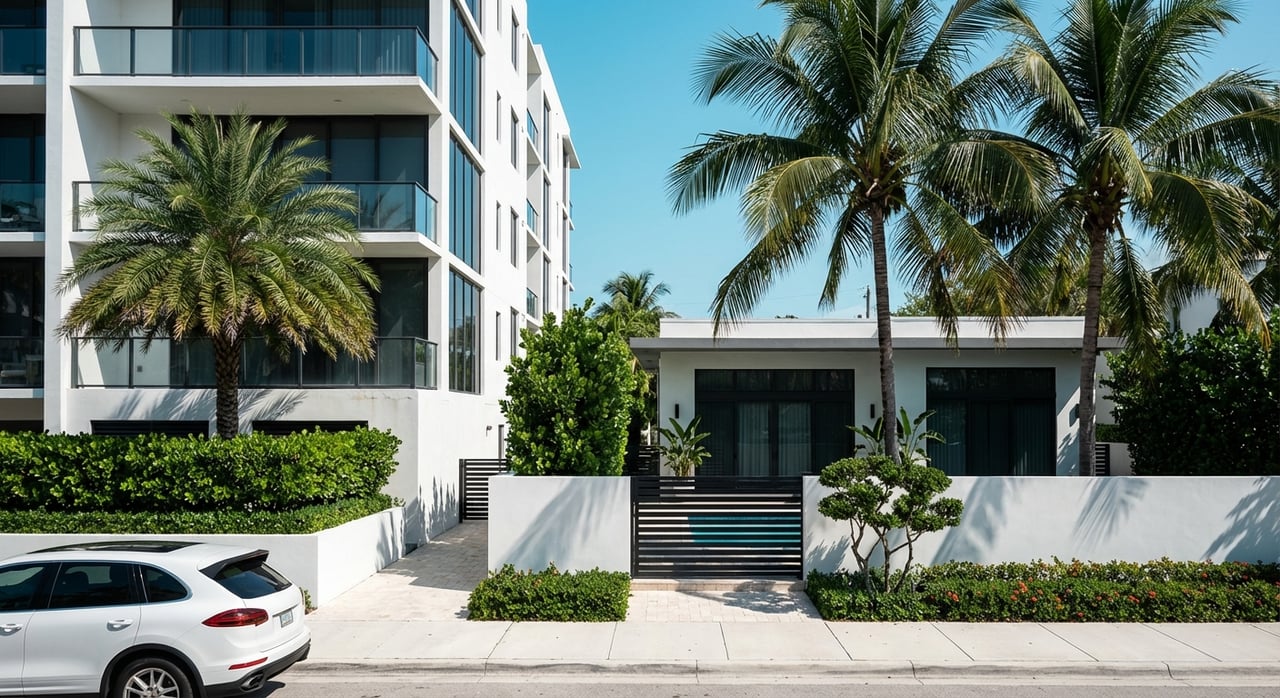
Picture your day in Delray Beach. Do you want to stroll to Atlantic Avenue for coffee and the beach, or would you rather host a backyard barbecue with plenty of parking and privacy? Your answer points you toward a condo near downtown or a single-family home inland. In this guide, you’ll learn the real differences in ownership, costs, financing, insurance, and local rules so you can choose with confidence. Let’s dive in.
Delray lifestyle and location fit
Delray Beach blends a lively coastal core with quieter inland neighborhoods and has roughly 70,000 residents. The housing mix spans beachfront and downtown condos, townhomes, and single-family homes in established areas. That means you can tailor lifestyle to location. U.S. Census QuickFacts for Delray Beach offers helpful context.
If walkability to dining, events, and the beach is your top priority, condos close to Atlantic Avenue and A1A often deliver that “lock and leave” convenience. The Delray Beach Downtown Development Authority overview highlights the area’s draw for food, shopping, and culture. If you prefer private outdoor space, parking, and more control over your property, you’ll likely find the best fit in single-family neighborhoods inland.
What you actually own
Condos
When you buy a condo, you own your interior unit and a shared interest in the building’s common elements. An elected board manages rules, collects dues, maintains common areas, and handles major building systems. Florida’s Condominium Act sets many of these rules for disclosures, records, budgets, reserves, and operations. Review the framework in Chapter 718 of Florida Statutes and make sure you receive a full association packet before you commit.
Single-family homes
With a single-family home outside an HOA, you control the house and yard. If the property sits inside an HOA, the association enforces covenants and maintains shared areas, but you still handle your home’s structure and systems. The practical takeaway is simple: condo buyers inherit a building’s policies and budgets, while single-family buyers manage their own exterior and systems, even if an HOA governs the neighborhood.
Maintenance and monthly costs
Condos
Association dues typically cover exterior maintenance like roofs and façades, common-area landscaping, amenities such as pools and gyms, and sometimes utilities or staff. You handle interior upkeep and personal property. Because the association is responsible for big-ticket repairs, special assessments can occur if reserves are short. Ask for the current budget, reserve study, meeting minutes, and insurance declarations. The DBPR’s condominium FAQs outline documents and owner rights.
What dues may include:
- Exterior building upkeep and common-area maintenance
- Amenities (pool, fitness room), landscaping, and basic services
- Possible partial utilities or staffing, depending on the building
What dues do not include:
- Your interior finishes and fixtures
- Your contents and personal liability coverage
- Deductibles or special assessments if reserves are low
Single-family homes
You are responsible for roof, exterior, systems, and yard. Costs vary by age and condition, but you control the timing, materials, and vendors. If an HOA is present, it may cover shared gates, landscaping, or a clubhouse, but usually not your roof or major systems. Read the HOA documents to confirm what the dues include.
New Florida condo rules to know
Florida added structural safety and reserve requirements for many mid- and high-rise condos after Surfside. Buildings three stories or higher must complete “milestone” structural inspections and a Structural Integrity Reserve Study (SIRS) on a statutory schedule, then plan funding for identified items. These rules are affecting financing, insurance, and assessment risk, especially in older coastal buildings. For a clear overview, see this industry summary of the changes and timelines: Florida’s milestone inspections and SIRS.
What to request if you’re considering a condo in a 3+ story building:
- The most recent milestone inspection reports (phase 1 and, if needed, phase 2)
- The Structural Integrity Reserve Study and the current reserve balances
- Any announced or proposed special assessments and the project’s funding plan
If the association cannot produce these, treat it as a red flag and slow down.
Insurance and flood in coastal Florida
Condos
The condo association usually carries a master property and liability policy for the building’s common elements and, based on the declaration, some of the building shell. You still need an HO-6 policy for your interior finishes, contents, personal liability, and loss assessment coverage. Adequate building insurance and periodic appraisals are addressed in Florida’s Condominium Act under Chapter 718. Confirm whether the master policy is “bare-walls” or “all-in,” and understand deductibles.
Flood exposure
Standard home or condo policies do not include flood. For condos in flood zones, the building may carry an RCBAP (Residential Condominium Building Association Policy) through the NFIP, which covers the building up to program limits. Unit owners still need their own flood coverage for interiors and contents. Check your address early using the FEMA Flood Map Service Center and ask for the building’s flood policy and deductible information.
Insurance costs in coastal Florida have been elevated in recent years. Quotes can vary widely by location, building age, and policy form. Get estimates from local brokers early in your search and factor deductibles and any potential assessments into your total monthly costs.
Financing and resale considerations
Condos
Lenders approve you and the condo project. Conventional, FHA, and VA programs each have project standards. If a building shows low reserves, unresolved structural issues, heavy commercial space, or pending litigation, financing may be limited or more expensive. Ask your lender to confirm project eligibility up front and to explain your options if the project requires an enhanced review. For a sense of what underwriters look for, review Fannie Mae’s condo project guidance.
Healthy reserves, completed SIRS reports, and clear budgets support easier financing and smoother resale. Share the association documents with your lender early so you can avoid last-minute surprises.
Single-family homes
Detached homes usually face fewer project-level checks. Your loan hinges more on you and the property’s condition and value. That simplicity can speed up closing and may reduce the risk of lender delays tied to association documents.
Short-term rentals and income rules
If you plan to rent seasonally, understand the rules at the state, county, city, and association levels.
- Licensing: Florida requires DBPR licensing for transient vacation rentals. Review the state overview for hosts on the DBPR Hotels and Restaurants page.
- Delray Beach city update: The city’s landlord permit program was rescinded and is no longer required as of October 1, 2023. You must still follow state licensing and any condo or HOA rental rules. See the city’s notice: Delray Beach landlord permit update.
- County tax: Palm Beach County requires registration and monthly reporting for the 6 percent Tourist Development Tax (TDT), even in months with no rentals. Learn more at Palm Beach County’s TDT page.
Many condo associations and HOAs set rental minimums, caps, or waiting periods. Confirm written rules before you buy if income is part of your plan.
Quick buyer checklist
Use this list to reduce risk and protect your budget:
- Request the full association packet: budget, reserve study, bylaws/declaration, recent board minutes, insurance declarations, litigation disclosures, and assessment history. The DBPR condominium FAQs explain owner document rights.
- For condos 3+ stories, review the latest milestone inspection reports and the SIRS, plus any funding plan and assessment timelines.
- Confirm insurance details: master policy type and limits, wind/hurricane deductibles, flood coverage, and how deductibles would be funded after a storm.
- Pull FEMA flood maps for the address and factor flood zone into premiums and lender requirements.
- Ask your lender to evaluate condo project eligibility early and outline alternatives if the project fails a standard review.
- For rentals, confirm state licensing needs, county TDT registration, and any condo or HOA rental limits.
Which is right for you?
Choose a condo if you want low-maintenance living close to the beach and Atlantic Avenue, with amenities like a pool and gym, and you are comfortable with association rules, dues, and shared decision-making. Expect to review building reserves, inspection reports, and financing eligibility carefully.
Choose a single-family home if you value private outdoor space, a garage, and design control, and you are ready to handle roof, yard, and system upkeep. If there is an HOA, read the covenants so you understand any design guidelines and community services.
Not sure which way to go? Let your daily rhythm guide the choice, then stress-test the numbers for insurance, dues, and potential assessments. The right fit is the one that supports your lifestyle and protects your budget.
Ready to explore both options with local guidance and full MLS access? Connect with Michael Downey to compare specific buildings and neighborhoods, run true carrying-cost scenarios, and line up lender and insurance checks early.
FAQs
What do condo dues usually cover in Delray Beach?
- Most associations cover exterior maintenance, common-area services, and amenities. You still insure and maintain your interiors. Always review the current budget and reserves in the association packet.
How do Florida’s new condo inspection rules affect buyers?
- Buildings three stories or higher must complete milestone inspections and a SIRS, which shape reserves and potential assessments. Ask for these reports and funding plans before you commit.
What flood insurance is typical for a Delray Beach condo near the water?
- The building may carry an RCBAP through the NFIP for the structure. You still need your own flood policy for interiors and contents and should verify the flood zone using FEMA’s map tool.
Can you use a Delray Beach condo or home for short-term rentals?
- Yes, if it complies with state DBPR licensing, Palm Beach County’s 6 percent TDT registration and reporting, and your condo or HOA’s rental rules. Many associations set rental minimums or caps.
Is it harder to get a mortgage on a Delray condo than a house?
- Often, yes. Lenders review the condo project’s reserves, insurance, and legal status in addition to your finances. Strong reserves and clean reports improve approval odds and resale value.